

Key features
The feature engineering sub-feature provides the following:- AI-generated feature recipes: Accepts a proposal describing your prediction problem and automatically designs a feature recipe and generates a SQL query from it.
- Built-in SQL validation: Validates generated SQL against Trino before presenting the proposal, so only working queries reach you.
- Configurable approval: Supports editing the recipe before committing. Nothing materializes without your approval.
- Data materialization: Materializes approved recipes to a target table.
- DataHub registration: Tags materialized target tables and records its lineage back to the source tables in DataHub.
How it works
The following sections explain the core concepts behind feature engineering in NexusOne.What is a feature recipe?
At the core of feature engineering is something called a feature recipe. You design one by submitting a proposal to NexusOne. Before you submit one, it’s helpful to understand what a feature recipe is. As previously explained, a model can’t learn from raw source tables. A feature recipe is the specification that defines how to compute a clean, model-ready target table from source tables.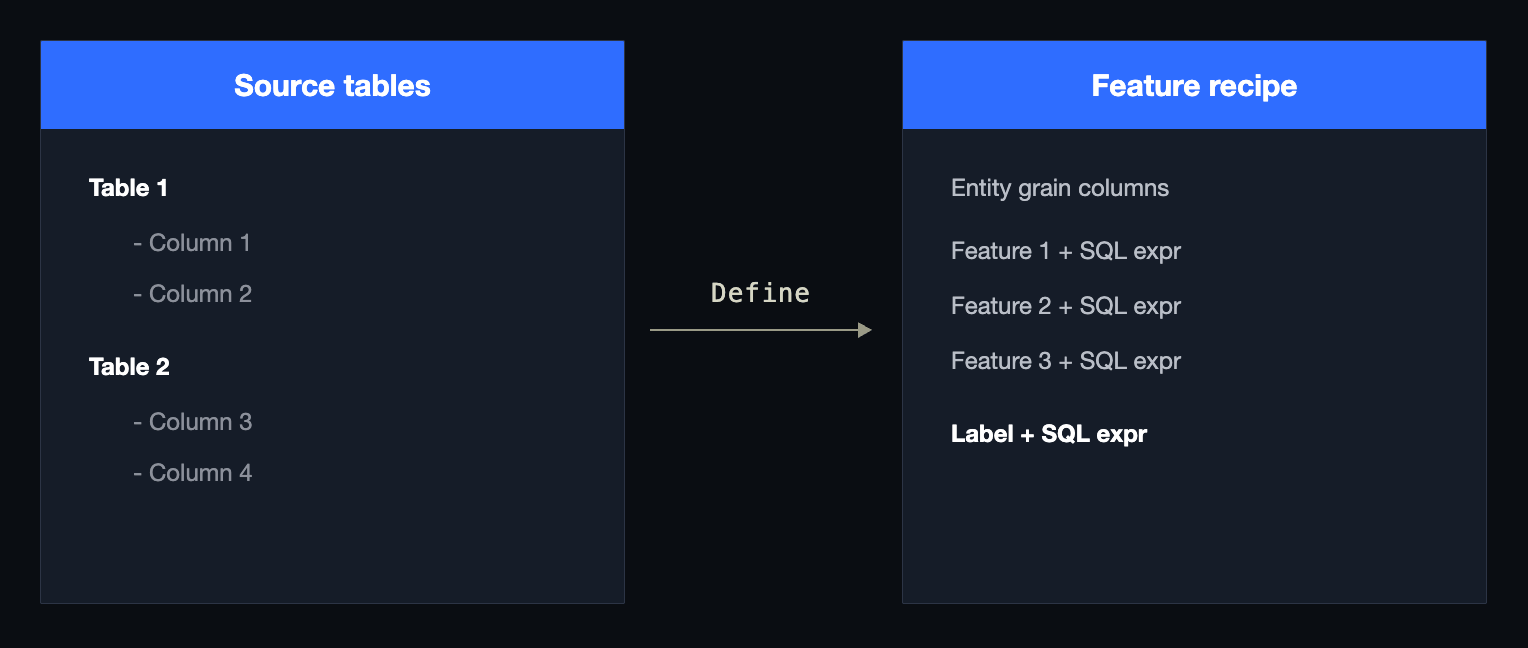
Feature recipe
signup_dateorder_amountsupport_ticket_date
months_active: Computed fromsignup_dateto represent how long the customer has been with the companyavg_monthly_spend: Computed fromorder_amountto represent the average amount the customer spends per monthtickets_last_30_days: Computed fromsupport_ticket_dateto represent the number of support tickets the customer raised in the last 30 days
- Name of the feature
- Description of why the feature is useful
- Data type of the feature
- SQL expression NexusOne runs during materialization to compute this column
Materialization is when NexusOne runs a SQL statement and saves the results to a target Iceberg table.
Feature engineering proposals
To have NexusOne create a feature recipe, you must first create a feature engineering proposal. A feature engineering proposal is a request you send to NexusOne to design a feature recipe for your prediction problem. To create one, provide the following:- Your prediction goal in plain language
- Source tables that hold your raw data
- Target table where NexusOne creates the model-ready dataset
- Entity grain columns that uniquely identify each row, which NexusOne carries into the target table as identifiers
- A label column that holds the outcome the model learns to predict
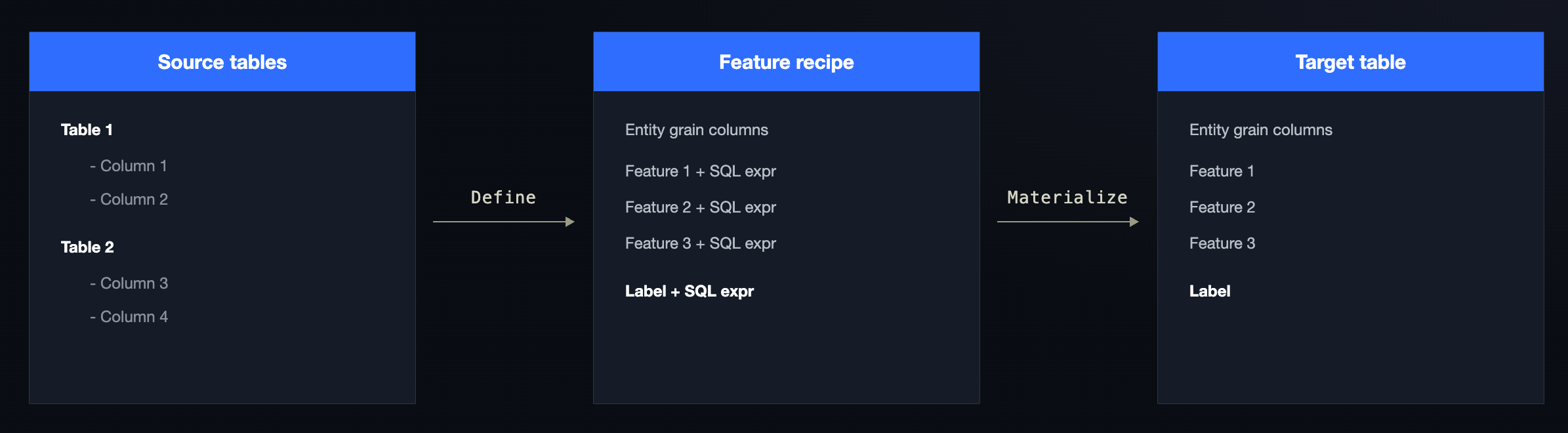
Feature engineering proposal
Use cases
These examples show how different industries can use NexusOne’s feature engineering capabilities:- Retail: Prepare a demand forecasting dataset from sales history and product catalog data. Features might include recent sales trends and seasonal patterns.
- Financial services: Prepare a fraud detection dataset by combining transaction records with customer profiles. Features might include spending velocity and unusual transaction activity.